What Is the Recommended Tire Pressure and Why It Matters?
The recommended tire pressure is a manufacturer-specified air level, typically ranging from 30 to 35 PSI, engineered to ensure that a vehicle’s weight is distributed evenly across the tire’s tread pattern.
Maintaining this precise balance is a critical safety and financial necessity, as it directly dictates how the vehicle interacts with the road surface through three vital functions:
- Structural Integrity and Safety: Proper inflation provides the necessary tension for tires to maintain their shape under load, ensuring maximum traction and responsive braking. Deviating from the factory PSI leads to excessive sidewall flexing and heat buildup—the primary cause of catastrophic tire blowouts.
- Mechanical Efficiency: Correct air levels minimize rolling resistance, reducing the engine’s workload and optimizing fuel economy by up to 3%. Under-inflated tires act as a constant drag on the vehicle, forcing higher fuel consumption for the same distance traveled, which is one of the most common car shaking issues drivers experience.
- Tread Preservation: Precise pressure ensures a uniform “contact patch” with the pavement, allowing the rubber to wear down evenly. This prevents premature bald spots on the edges or center, effectively doubling the operational life of the tires compared to those running on incorrect pressure.
How to Check Tire Pressure the Right Way?
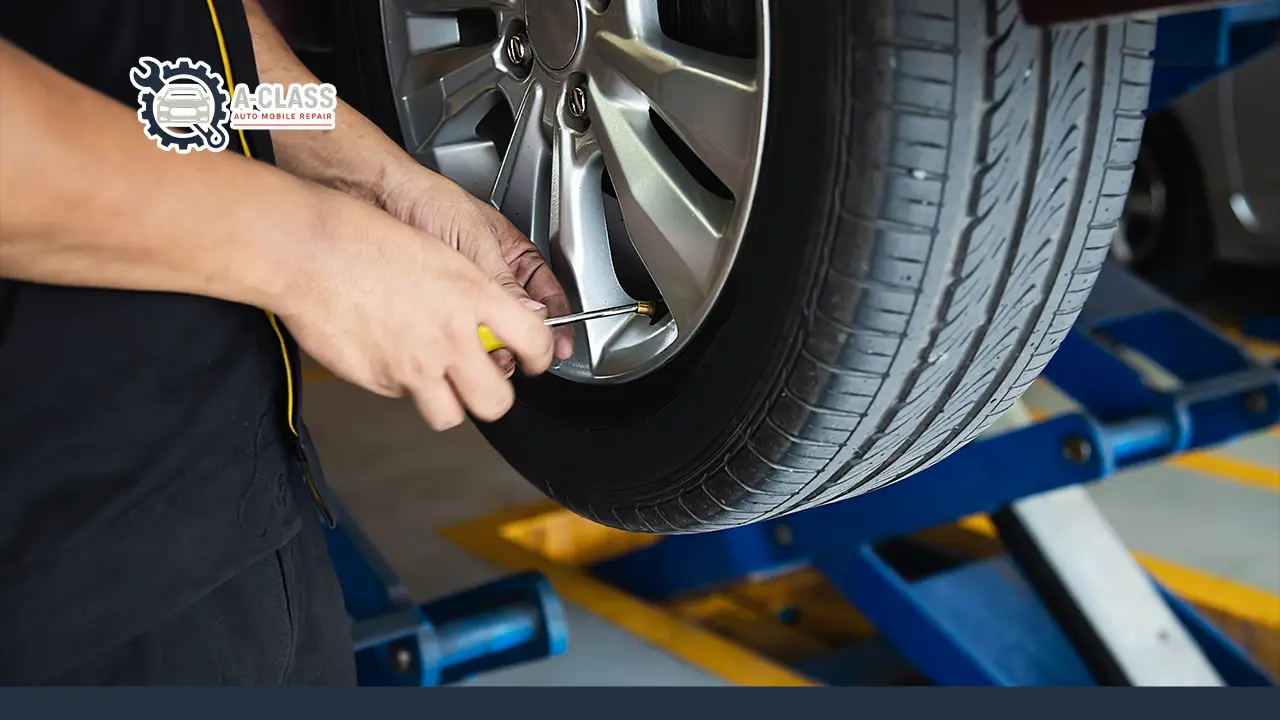
To get an accurate reading of your vehicle’s air levels, you should use a reliable gauge monthly rather than just eyeballing the rubber. Here are the practical steps to measure your tires correctly:
- Test on cold tires: Always take your measurements before hitting the road or after the car has been parked for at least three hours to avoid false high readings from heat expansion.
- Use the gauge properly: Remove the small cap from the valve stem, press your measurement tool firmly until any hissing sound completely stops, and read the final number on the screen or stick.
- Adjust the air accordingly: If the reading is too low, connect an air compressor to fill it up, or gently press the metal pin inside the valve to release excess air if the level is too high.
What Is the Correct PSI for Tires for Your Vehicle?
While the recommended tire pressure generally hovers around 30 to 35 PSI for standard passenger vehicles, every model has its own uniquely engineered sweet spot. This tire inflation guide can help you determine the exact PSI your specific car needs by keeping the following points in mind:
- Trust the factory specifications: The automaker calculates the perfect inflation level based on the exact weight and suspension of your car model, providing the safest and most comfortable ride possible.
- Ignore the sidewall markings: The numbers stamped directly onto the rubber indicate the absolute maximum pressure the tire can physically hold before failing, never the everyday operational target.
Where to Find Tire Pressure Rating in Your Car?
You never have to guess or search randomly to find the exact air requirements for your daily commute, as automakers place this information in highly visible spots. You can easily locate these crucial details in the following areas:
- The driver’s side door jamb: This is the most common and accessible spot, featuring a permanent placard that clearly lists the ideal PSI for both the front and rear wheels.
- The main owner’s manual: Your vehicle’s primary booklet contains a dedicated maintenance section with comprehensive details regarding wheel care and proper inflation rates.
- Additional hidden locations: Depending on how new your car is, you might also find this informative sticker placed inside the fuel filler door or tucked away in the glove compartment.
What Is the Recommended Tire Pressure and Why It Matters?
Maintaining the recommended tire pressure, which typically falls between 30 and 35 PSI for most cars, is a crucial step for ensuring a smooth and secure driving experience. The manufacturer sets this specific number to balance overall performance, and its importance highlights several key areas:
- Ensuring optimal safety: Proper inflation guarantees excellent road traction and responsive handling, whereas low pressure risks dangerous blowouts and overinflation makes the car difficult to steer.
- Boosting fuel efficiency: Tires lacking enough air create excess drag against the pavement, forcing your engine to work harder and burn noticeably more gas to keep the vehicle moving.
- Extending tire longevity: Keeping the air levels exactly right prevents your treads from wearing out unevenly along the outer edges or down the center, saving you from costly premature replacements.
How to Check Tire Pressure the Right Way?
To get an accurate reading of your vehicle’s air levels, you should use a reliable gauge monthly rather than just eyeballing the rubber. Here are the practical steps to measure your tires correctly:
- Test on cold tires: Always take your measurements before hitting the road or after the car has been parked for at least three hours to avoid false high readings from heat expansion.
- Use the gauge properly: Remove the small cap from the valve stem, press your measurement tool firmly until any hissing sound completely stops, and read the final number on the screen or stick.
- Adjust the air accordingly: If the reading is too low, connect an air compressor to fill it up, or gently press the metal pin inside the valve to release excess air if the level is too high.
Need a fast and reliable mobile mechanic in Houston Texas? A-Class Auto offers 24/7 mobile auto repair with 47+ expert mechanics & 8+ years of experience. Call now!
Call NowWhat Is the Correct PSI for Tires for Your Vehicle?
While the recommended tire pressure generally hovers around 30 to 35 PSI for standard passenger vehicles, every model has its own uniquely engineered sweet spot. To figure out the exact number your specific car needs, keep these points in mind:
- Trust the factory specifications: The automaker calculates the perfect inflation level based on the exact weight and suspension of your car model, providing the safest and most comfortable ride possible.
- Ignore the sidewall markings: The numbers stamped directly onto the rubber indicate the absolute maximum pressure the tire can physically hold before failing, never the everyday operational target.
Where to Find Tire Pressure Rating in Your Car?
You never have to guess or search randomly to find the exact air requirements for your daily commute, as automakers place this information in highly visible spots. You can easily locate these crucial details in the following areas:
- The driver’s side door jamb: This is the most common and accessible spot, featuring a permanent placard that clearly lists the ideal PSI for both the front and rear wheels.
- The main owner’s manual: Your vehicle’s primary booklet contains a dedicated maintenance section with comprehensive details regarding wheel care and proper inflation rates.
- Additional hidden locations: Depending on how new your car is, you might also find this informative sticker placed inside the fuel filler door or tucked away in the glove compartment.
Common Mistakes When Checking Tire Pressure
Avoiding basic maintenance errors is just as important as knowing your vehicle’s recommended tire pressure, so make sure you never fall into these frequent pitfalls:
- Measuring right after a drive: Testing the rubber when it is still hot from road friction will give you a falsely high reading, tricking you into thinking you have more air than you actually do.
- Relying on public gas station tools: The built-in gauges attached to free air pumps at gas stations are dropped and abused daily, meaning they are rarely calibrated and highly inaccurate.
- Forgetting the emergency spare: Drivers constantly neglect the hidden tire sitting in their trunk, which can leave them completely stranded with a flat spare when an actual roadside emergency strikes.
Tire Pressure Tips for Summer vs Winter Driving
Extreme seasonal weather dramatically shifts how air behaves inside your wheels, requiring different approaches to keep your vehicle completely safe and stable on the road:
- Combating harsh winter drops: Freezing morning temperatures and summer heat changes makes regular checks part of essential seasonal maintenance, especially in Houston weather conditions.
- Handling extreme summer heat: Never bleed out or release air from a hot tire during a summer road trip, and try to park in the shade to prevent intense solar heat from temporarily ballooning your PSI.
How Temperature Affects Recommended Tire Pressure?
Understanding the direct physical relationship between ambient weather and your recommended tire pressure helps you anticipate natural fluctuations before they become a driving hazard:
- The golden 10-degree rule: For every 10-degree Fahrenheit drop or spike in the outside climate, the air inside your tires will naturally contract or expand, losing or gaining exactly 1 PSI.
- Daily morning and afternoon shifts: Because air molecules change volume based on warmth, a tire that measures perfectly in the chilly dawn might show a significantly higher PSI by mid-afternoon.
Signs Your Tire Pressure Is Too Low or Too High
Your vehicle will actively communicate with you when the air levels are incorrect, displaying clear physical and behavioral symptoms that demand your immediate attention:
- Symptoms of underinflation: If the tread is exclusively smoothing out on the far outer edges and your steering starts feeling heavy, sluggish, or unresponsive, the rubber is severely lacking air, which is often considered a clear diagnostic signs that should not be ignored.
- Symptoms of overinflation: When the tire is ballooned with too much air, the center of the tread takes all the road impact, resulting in a terribly bumpy ride and a dangerous lack of grip on wet pavement.
Professional Care for Your Tires at A-Class Auto
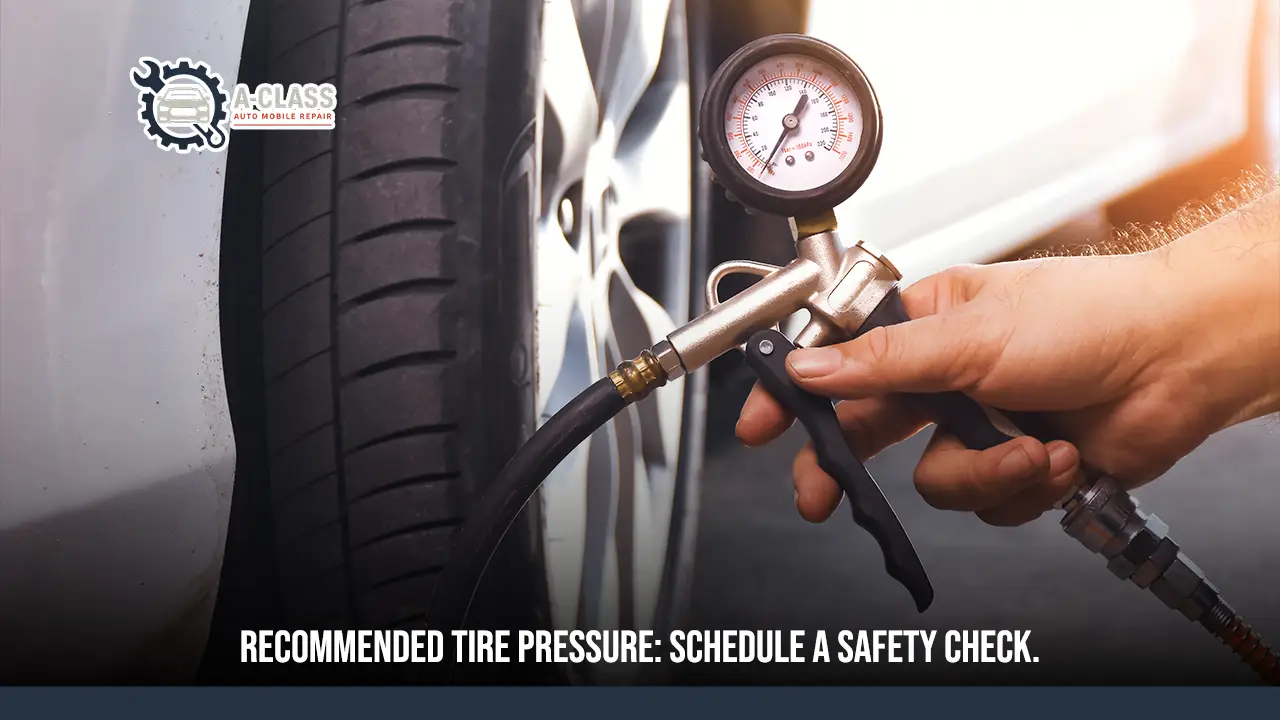
For professional help, you can visit A-Class Auto or call a mobile mechanic houston tx for convenient on-site tire pressure and safety inspection services. Our expert technicians ensure your tires meet exact factory specifications for optimal performance, safety, and fuel efficiency.
FAQs About Recommended Tire Pressure
Should my tires be 32 or 35 psi?
Both 32 and 35 PSI are standard recommended tire pressures for most passenger vehicles. The exact number depends on your car’s specific weight, suspension, and load capacity.
Always refer to the sticker on the driver’s side door jamb rather than guessing, as 32 PSI might be perfect for a lighter sedan, while 35 PSI might be necessary for a crossover or small SUV to handle properly.
Is 40 psi tire pressure good?
For most standard passenger cars, 40 PSI is considered overinflated. Driving with this much air can lead to a harsh, bumpy ride, rapid tread wear down the center of the tire, and reduced traction on wet roads. However, for certain heavy-duty trucks, electric vehicles (EVs), or when carrying maximum loads, 40 PSI might be exactly what the manufacturer requires. Always check your vehicle’s door jamb placard to be sure.
What psi for RAV4 tires?
The recommended tire pressure for a Toyota RAV4 is typically between 32 and 33 PSI for all four tires, depending on the specific model year and factory tire size.
Because the RAV4 is a compact SUV, this pressure provides the ideal balance of fuel efficiency, tire longevity, and a comfortable ride. Check the sticker inside your driver’s door for the exact specification for your year.
What should Kia Telluride tire pressure be?
The standard recommended tire pressure for a Kia Telluride is usually 35 PSI for all four tires. Since the Telluride is a larger, three-row SUV designed to carry heavier passenger loads and cargo, maintaining this exact 35 PSI is crucial for safely supporting the vehicle’s weight, preventing tire overheating, and ensuring optimal handling on long trips.